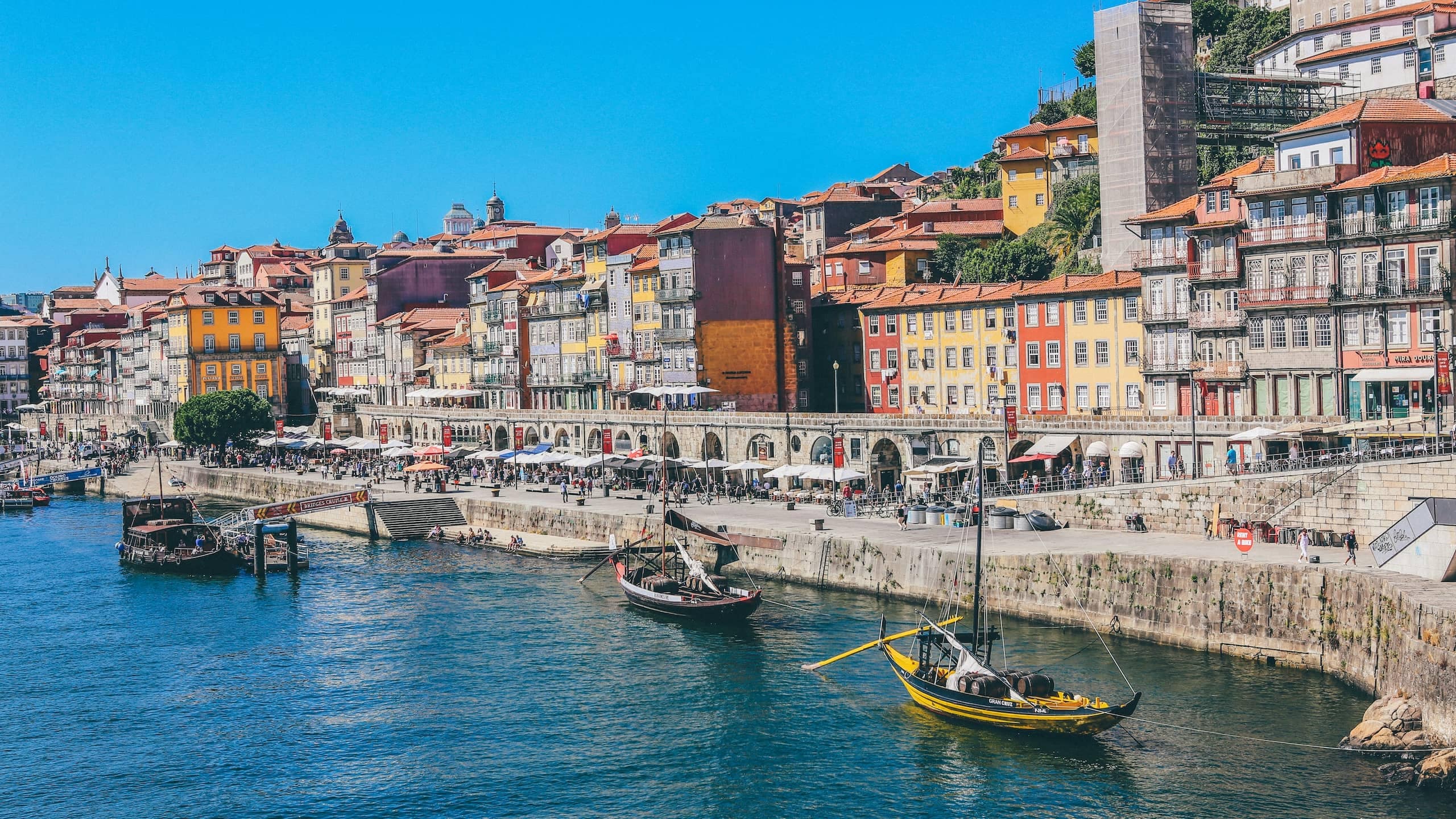
Porto’s Ribeira waterfront and rabelo boats on the Douro
Residency by investment

Portugal Golden Visa

Real estate is gone and citizenship now takes longer, but the program is alive. Here's the version that still exists, and whether it fits you.

€500k
into a CMVM-regulated fund, held at least five years, the route most applicants take
€250k
the cultural donation alternative. A lower bar, but the money is not returned
7 days / yr
minimum stay in year one, then 14 days per two-year period, among the EU’s lowest
12–18 months
a realistic wait for your first residence card
10 years
to citizenship for most investors since May 2026, 7 years for EU and Portuguese-speaking nationals

Five routes remain. One dominates.

Real estate and the €1.5M capital transfer were removed in October 2023. These five still qualify, and in practice, most 2026 applicants take the first.

Route
You need
Permit in
You're here
Fits you if
1
Route
Investment fundCMVM-regulated, five-year hold
You need
€500,000 in a qualifying fundprincipal usually returned at maturity, minus fees
Permit in
12–18 months
You're here
7 days / yr
Fits you if
You have €500,000 in genuinely surplus capital and want the EU foothold without moving.
2
Route
Cultural donationHeritage, arts or research
You need
€250,000 donation€200,000 in low-density areas; not returned, it’s a gift
Permit in
12–18 months
You're here
7 days / yr
Fits you if
Fund risk bothers you more than parting with the money outright. A small share of applications.
3
Route
Job creationTen full-time roles
You need
No fixed minimumeight roles in low-density areas; employing people costs more than it sounds
Permit in
12–18 months
You're here
7 days / yr
Fits you if
You're genuinely building a business in Portugal, not just after mobility.
4
Route
Company formationArticle 90-A: capital plus jobs
You need
€500,000 + 5 jobsincorporate or recapitalise a Portuguese company and hold five permanent jobs for three years
Permit in
12–18 months
You're here
7 days / yr
Fits you if
You are genuinely building a company here and can carry both the capital and the payroll, not a mobility-focused applicant.
5
Route
Scientific researchNational research system
You need
€500,000transferred into Portugal’s scientific and technological research system
Permit in
12–18 months
You're here
7 days / yr
Fits you if
You want a fixed-sum route outside the fund market and are comfortable backing research rather than a returnable investment.

Beyond the investment, budget €23,000–€41,000 in legal, government and advisory costs the first year, the €500,000 is the floor, not the total. In low-density interior areas some thresholds fall: the cultural donation to €200,000 and job creation to eight roles. Real estate and the €1.5M transfer route have been gone since October 2023; if a guide still lists them, it's out of date.

Portugal fits you if…

  • 1You have €500,000 in genuinely surplus capital, not earmarked for anything else within five years.
  • 2You want EU residency without relocating, the seven-day annual minimum is the program's defining advantage.
  • 3Schengen access is a structural priority for you, for some passports, the travel flexibility is significant.
  • 4You're planning around a long-term EU horizon for your family, low presence means no forced disruption before you're ready.

Not you? Here instead.

The detail, when you want it.

Yes. It was restructured in October 2023, not cancelled. Real estate was removed as a qualifying route; the fund, cultural donation, job creation and company formation routes remain and are accepting applications in 2026.
With Spain's Golden Visa closed since April 2025, Portugal stands out as the only EU program built around a real-estate-free venture and private-equity fund route. It is not the only residency-by-investment program in the EU, Hungary, Greece, Italy and Malta all run active schemes, but none is structured around funds the way Portugal's is.
Legal and advisory fees run €8,000–€15,000. Government (AIMA) fees are higher than most guides admit: the issuance fee alone is around €6,300–€8,400 per person, and with application, analysis and later renewals the government total reaches €15,000–€18,000 per person across the five-year programme, charged per family member and indexed annually. Health insurance is €1,000–€2,000 a year per adult, a tax advisor €2,000–€5,000, and fund management fees 1–2% a year, €5,000–€10,000. First-year non-investment costs land around €23,000–€41,000 per applicant.
Over five years, management fees alone run €25,000–€50,000 before any return. The €500,000 is the floor, not the total.
The five-year path is gone. Since May 19, 2026, naturalisation requires ten years of residence for most applicants, seven for nationals of EU and Portuguese-speaking (CPLP) countries. The clock starts when your first residence card is issued, and only lawful residence counts.
The change came through Lei Orgânica 1/2026: voted on April 1, 2026, promulgated in May, and in force since May 19. The transitional protection is narrow, it covers only citizenship applications filed with the IRN on or before May 18, 2026. It does not protect a Golden Visa residence application: if you held residency but had not yet filed for citizenship before the cutoff, you are not grandfathered into the old five-year rule. For a Golden Visa investor who is not an EU or CPLP national, plan on ten years to citizenship, and confirm your own position with a current Portuguese immigration lawyer.
The Non-Habitual Resident (NHR) regime closed to new applicants on January 1, 2024. A transitional regime kept it open for people whose ties predate the change, and the tax authority’s own FAQ says a qualifying 2024 resident who registers after March 31, 2025 can still be admitted, for the remaining years only. For anyone moving now, it is closed. Its replacement, the IFICI framework (sometimes called “NHR 2.0”), applies to residents from January 1, 2024 but is far narrower, targeting highly qualified workers in designated sectors and scientific research. If your income doesn’t fit those categories, the old NHR benefits are no longer available to new applicants.
US citizens are taxed on worldwide income regardless of residence, Portuguese residency does not change that. Verify your position with a Portuguese tax advisor before deciding anything on tax grounds.
The fund must be CMVM-regulated, hold at least 60% of its capital in Portugal-headquartered companies, carry no real estate exposure, and have a minimum five-year maturity.
Most fund information online comes from providers with an interest in steering you. Ask any fund or advisor: the historical return and annual fees; how much capital is deployed in Portugal and in what sectors; the exit mechanism at maturity and the record on returning principal; whether it is CMVM-regulated with a clean audit; and what happens if you need to exit early. Get the prospectus and read it before committing.
Historically 12–24 months from application to first card, and AIMA's current backlog can push cases beyond that. Budget 12–18 months as a realistic baseline, and don't count on anything faster.
Keep the lawyer and the fund as two separate professionals, a licensed immigration lawyer who does not also sell fund products, and a tax advisor who can read your income under IFICI. A single firm offering both may have conflicting incentives.

Official sources

Get your Portugal read.

Tell us where you stand. You'll get a straight read on whether the Golden Visa actually fits, the real costs, the honest trade-offs, and an introduction to a vetted lawyer or fund manager who already has your case. If it isn't right for you, we'll say so, and point you to what is.

The specialist pays our referral fee, not you.